
Why Your Drains Keep Clogging: A Texas Homeowner's Troubleshooting Guide
A clogged drain is annoying. A drain that clogs again a month after you cleared it is a message. Recurring clogs are rarely bad luck; they are symptoms of something specific happening inside your pipes. This guide walks through the most common causes room by room, what is safe to try yourself, what to avoid, and the Texas-specific factors that make drains here clog in their own special ways.
No invented stories here, no scare tactics. Just how drains work, what goes wrong, and how to think about the fix.
First, Figure Out What Kind of Problem You Have
Before touching a tool, do thirty seconds of diagnosis. It changes everything about what you should do next.
- One fixture is slow or clogged, everything else is fine. The problem is in that fixture's trap or branch line: hair, soap, grease, or an object. This is the simplest category.
- Several fixtures are slow at once, especially on the same floor. The problem is further down, in a shared branch or the main line. Think bigger.
- Water backs up in odd places. The shower fills when the toilet flushes, or the kitchen sink gurgles when the washer drains. That is a classic main line symptom: water is looking for any exit because the main path is restricted.
- Gurgling sounds. Air trapped by a partial blockage escaping through water. Occasional gurgling in one drain is minor; gurgling in multiple drains points to the main line.
- Sewage smells or actual backups. Stop diagnosing and call a professional. This is the one scenario where waiting costs more than acting.
Write down what you observe before you call anyone. "The kitchen sink and the guest bathroom tub are both slow, and the toilet gurgles" is ten times more useful to a plumber than "the drains are clogged," and it helps them bring the right equipment the first time.
The Kitchen: Grease Is the Villain
Kitchen clogs are almost always about grease and food. Here is the mechanism: hot grease goes down the drain as a liquid, cools as it travels, and solidifies on the pipe walls. Layer by layer, month by month, the pipe's opening shrinks. Food particles, coffee grounds, and soap then snag on that rough greasy surface. Eventually water cannot get through.
The cruel part is that it feels like it happens suddenly. It does not. A kitchen line can lose half its diameter over years without you noticing, because water still squeezes through. Then one normal dinner's worth of dishes tips it over the edge, and it looks like the clog appeared overnight.
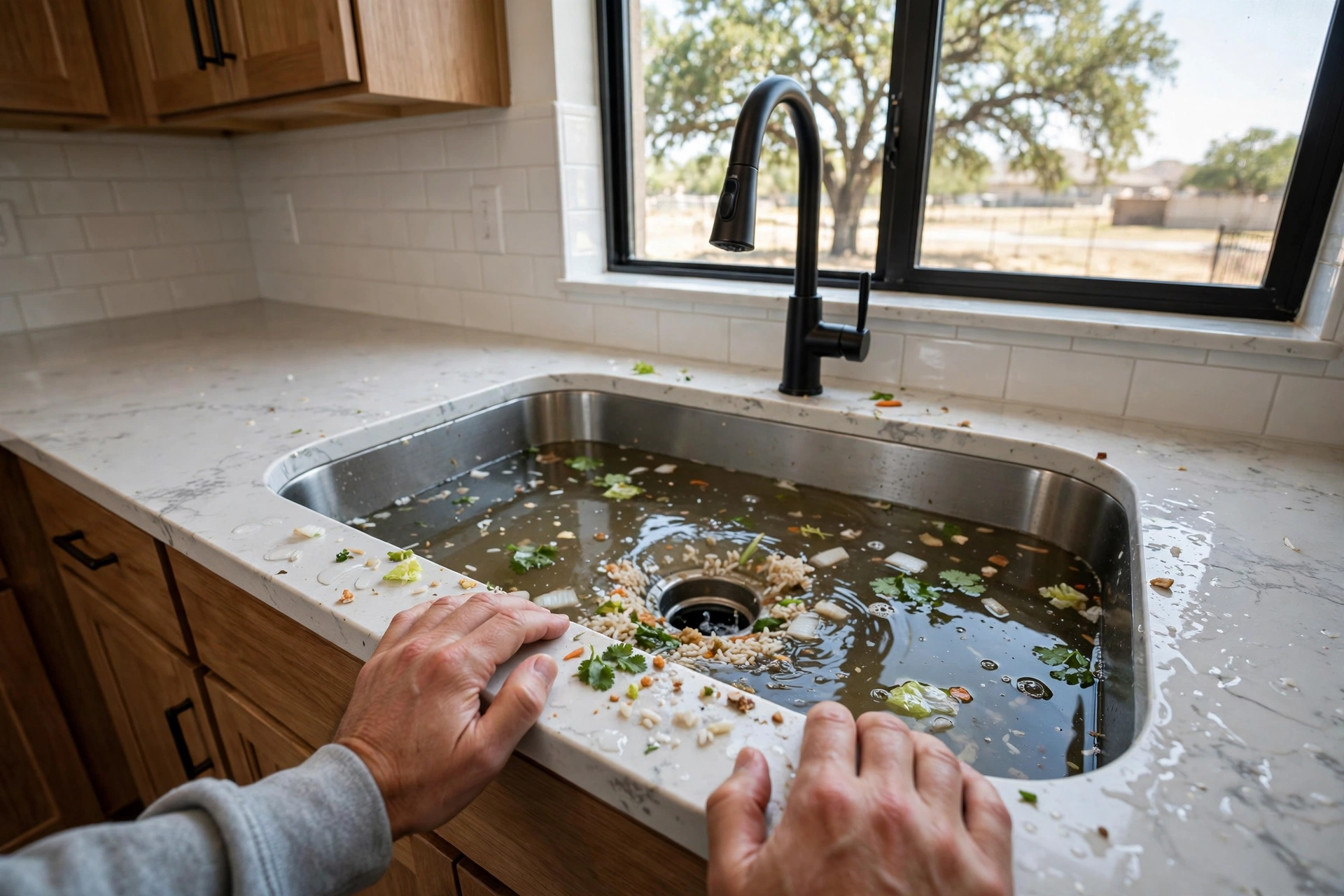
What helps: scrape plates into the trash before rinsing, wipe greasy pans with a paper towel before washing, and use a sink strainer. These three habits prevent more kitchen clogs than any product ever will.
What does not help: running hot water while pouring grease down the drain. The grease still cools and solidifies, just further down the line where it is harder to reach. And garbage disposals do not prevent clogs; they just make the particles smaller on their way to the same grease-coated pipe.
The Bathroom: Hair, Soap, and the Slow Buildup
Bathroom clogs are a team effort between hair and soap. Hair catches on the drain cover, the stopper mechanism, or any roughness inside the pipe. Soap scum, which is soap reacted with minerals in hard water, coats the hair and glues it into a mat. Texas hard water makes this worse: more minerals in the water means more soap scum binding every hairball together.
Shower and tub drains clog gradually and announce themselves early: water pooling around your feet is the first sign. Bathroom sink drains clog at the pop-up stopper assembly, where hair wraps around the mechanism. Toilets are a separate category: they clog from too much paper, the wrong kind of paper, or non-flushable items like wipes (even the ones labeled "flushable"), cotton products, and dental floss. If your shower drain keeps slowing down, our shower drain clog page covers how professionals clear them; for sinks, see slow draining sink fixes.
What helps: a simple hair catcher over the shower drain is the highest-value plumbing purchase most homeowners will ever make. Clean the pop-up stopper monthly by pulling it up and removing the hair wrapped around it. In the toilet, the rule is simple: only flush human waste and toilet paper, nothing else, ever.
The Laundry Room: The Forgotten Clog Source
Laundry drains do not get much attention until they back up, but they handle lint, detergent residue, fabric softener, and sometimes sand and dirt from work clothes. Modern high-efficiency detergent helps, but the old habit of using too much soap creates a residue that narrows the line over time. A lint catcher on the discharge hose costs a few dollars and keeps the worst of it out of the drain.
If your washer drain backs up only during the drain cycle, the standpipe or its trap is restricted. If multiple fixtures are affected when the washer runs, the problem is deeper, in the shared line, and that is main line territory.
Main Line Symptoms: When It Is Bigger Than One Drain
The main sewer line carries everything from your house to the city sewer or septic system. When it restricts, the symptoms are distinctive:
- Multiple drains slow down at the same time, especially lowest-floor fixtures first
- Toilets flush weakly or incompletely while sinks also drain slowly
- Gurgling in one fixture when another drains
- Water backing up in the shower or tub when the toilet flushes
- Sewage odors from drains, especially floor drains
- The cleanout cap outside leaking or showing standing water
Main line clogs have different causes than fixture clogs: tree root intrusion, grease accumulation over long runs, mineral scale, collapsed or bellied sections of pipe, and occasionally flushed objects that made it past the fixture but lodged in the main. These are not DIY jobs. Main line work needs professional equipment and, for recurring issues, a camera inspection to see what is actually happening down there. Our main line drain cleaning page covers what professional main line service involves.
What Is Safe to Try Yourself
For a simple single-fixture clog, there is a sensible ladder to climb before calling anyone:
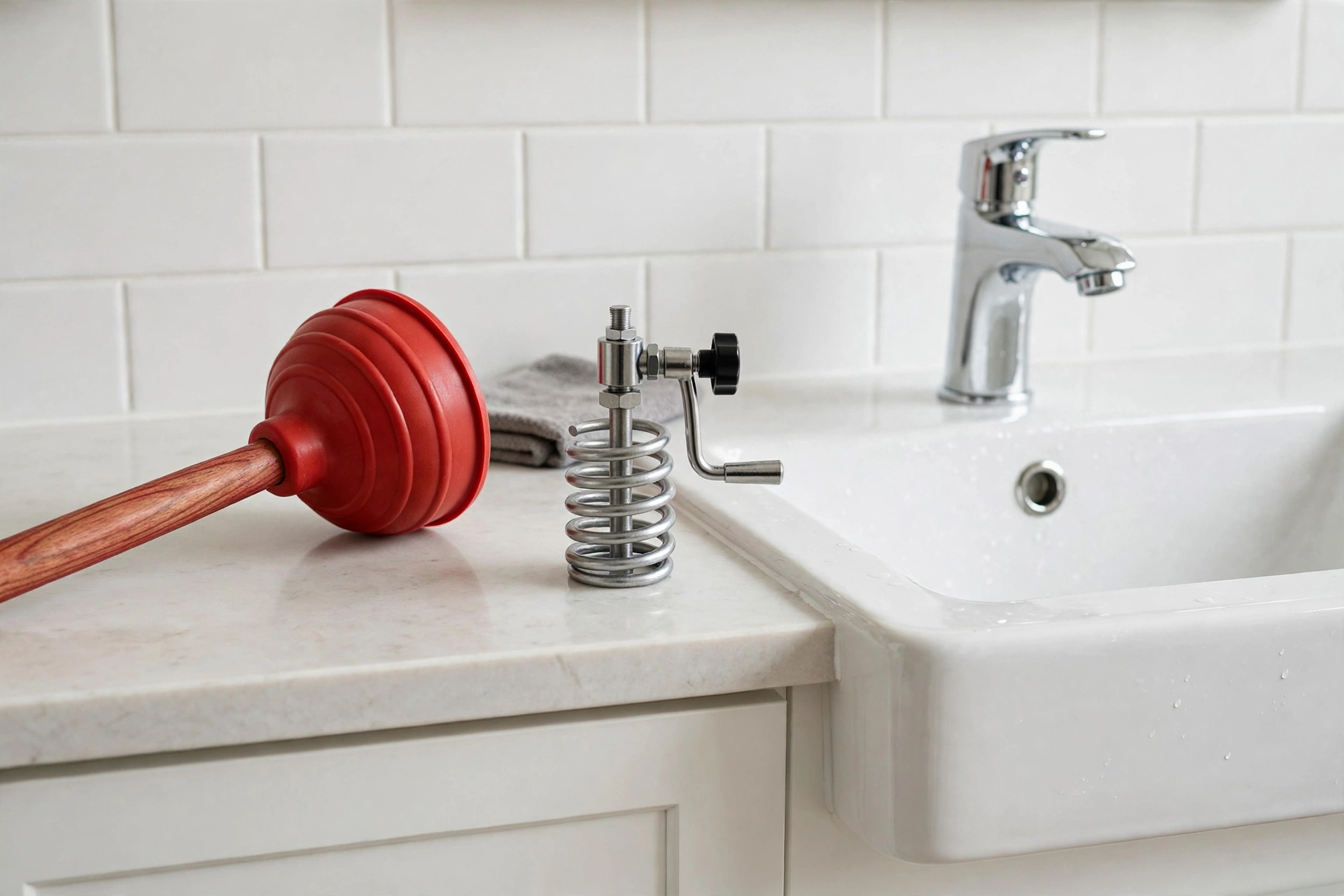
- Plunger. The right tool for the job, used correctly: a cup plunger for sinks and tubs, a flange plunger for toilets. Cover the overflow drain on sinks so pressure goes toward the clog. Ten to twenty vigorous plunges, then check.
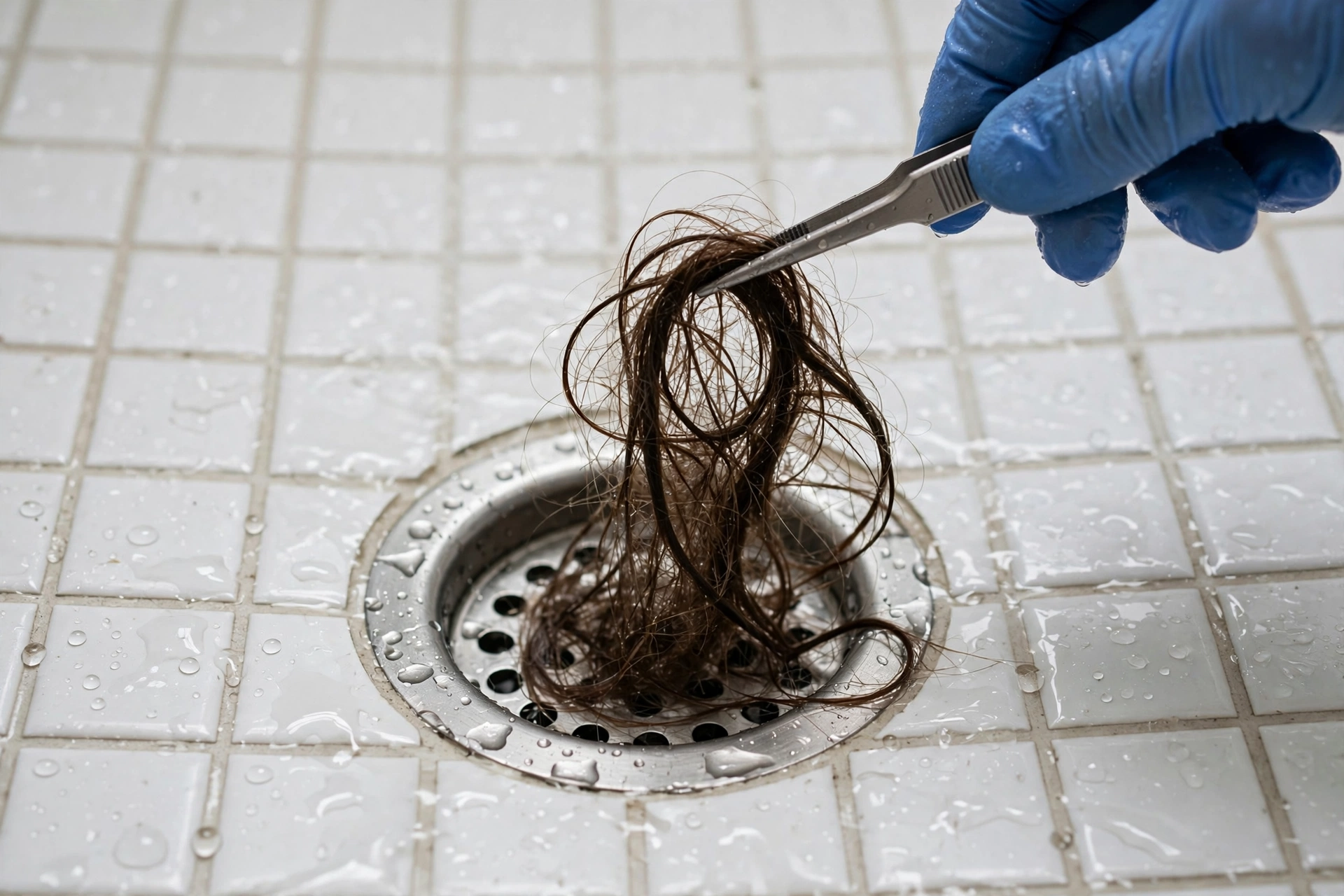
- Remove the visible clog. Pop-up stoppers, drain covers, and hair catchers collect the clog where you can reach it. Pull it out by hand (gloves on) or with tweezers. Deeply satisfying and often completely effective.
- Hot water flush. For a greasy kitchen sink that is slow but not fully blocked, a kettle of hot, not boiling, water can soften fresh grease. Boiling water can soften PVC pipe and damage seals, so keep it hot, not boiling.
- Hand auger. A small drum auger from the hardware store reaches clogs a few feet down. Feed gently, never force it, and stop if you meet solid resistance you cannot identify.
- Enzyme-based maintenance products. These use bacteria to digest organic buildup slowly. They are maintenance, not rescue: useful monthly in a kitchen line prone to grease, useless against a standing-water clog.
Stop and call a professional if: more than one fixture is affected, you smell sewage, water is backing up rather than just draining slowly, the clog returns within days of clearing, or you have already tried the steps above without success. Knowing when to stop is the most valuable DIY skill.
Real talk: there is no prize for clearing a clog yourself if the attempt makes it worse. A small hand auger used carefully is smart. The same auger forced through a bend it was never meant to take can crack a trap and turn a simple service call into a repair bill.
Why Chemical Drain Cleaners Are Risky
Those bottles under the sink promise an easy fix, and occasionally they even deliver one. But plumbers consistently warn against them, and the reasons are well documented:
- Heat damage to plastic pipes. Most chemical cleaners work through a reaction based on sodium hydroxide (lye) or sulfuric acid that generates intense heat. In PVC and ABS piping, that heat can soften joints and warp pipe walls, especially where the chemical sits concentrated behind a clog (Anta Plumbing, 2026).
- Corrosion of metal pipes. The same chemicals accelerate corrosion in cast iron and galvanized steel, eating at thin spots and joints. In copper lines, acid-based cleaners cause pitting that leads to pinhole leaks over time (Anta Plumbing, 2026).
- Seal and gasket damage. Chemical exposure degrades rubber seals, gaskets, and wax rings at trap connections and fixture joints, creating leaks that appear weeks after use (Anchor Plumbing Services, 2026).
- They do not fix the real problem. Chemical cleaners dissolve enough material to restore partial flow but leave pipe walls coated, do nothing for roots, scale, bellies, or venting issues, and the narrowed, now-damaged pipe tends to clog again quickly (PlumBrite, 2026).
- Septic system harm. For homes on septic, chemical cleaners kill the beneficial bacteria the tank needs to break down waste, which can cause backups and system failure (Ben Franklin Plumbing, 2026).
- Safety hazard for the next person. Chemical sitting behind a clog can splash back when a plumber snakes the line, turning a routine service call into a chemical burn risk (Anchor Plumbing Services, 2026).
The pattern plumbers describe is consistent: repeated chemical use creates new rough surfaces inside the pipe, those surfaces catch debris faster, clogs return sooner, and eventually the pipe is damaged enough that cleaning is no longer an option and repair is (PlumBrite, 2026). The "easy fix" quietly converts a maintenance problem into a construction problem.
If you have already used chemical cleaners, tell the plumber before they start work. It is a safety issue for them, and knowing changes how they approach the job.
Texas-Specific Causes Worth Knowing
Some clog causes hit harder in Texas than elsewhere, and knowing them helps you describe symptoms accurately:
- Hard water scale. Much of Texas has hard water, and dissolved minerals precipitate out inside pipes as scale. Scale roughens the interior surface, which gives grease, soap, and debris something to grip. If your fixtures show white crusty buildup, your pipes likely have it too. Scale is exactly the kind of problem snaking punches through without removing, which is why scaled lines often need hydro jetting to truly reset.
- Expansive clay soil. Large parts of Texas sit on clay soils that swell when wet and shrink when dry. That seasonal movement can shift buried sewer lines, creating low spots where solids settle and joints that separate enough for roots to enter. If your main line clogs every rainy season like clockwork, soil movement is a plausible suspect, and only a camera inspection can confirm it.
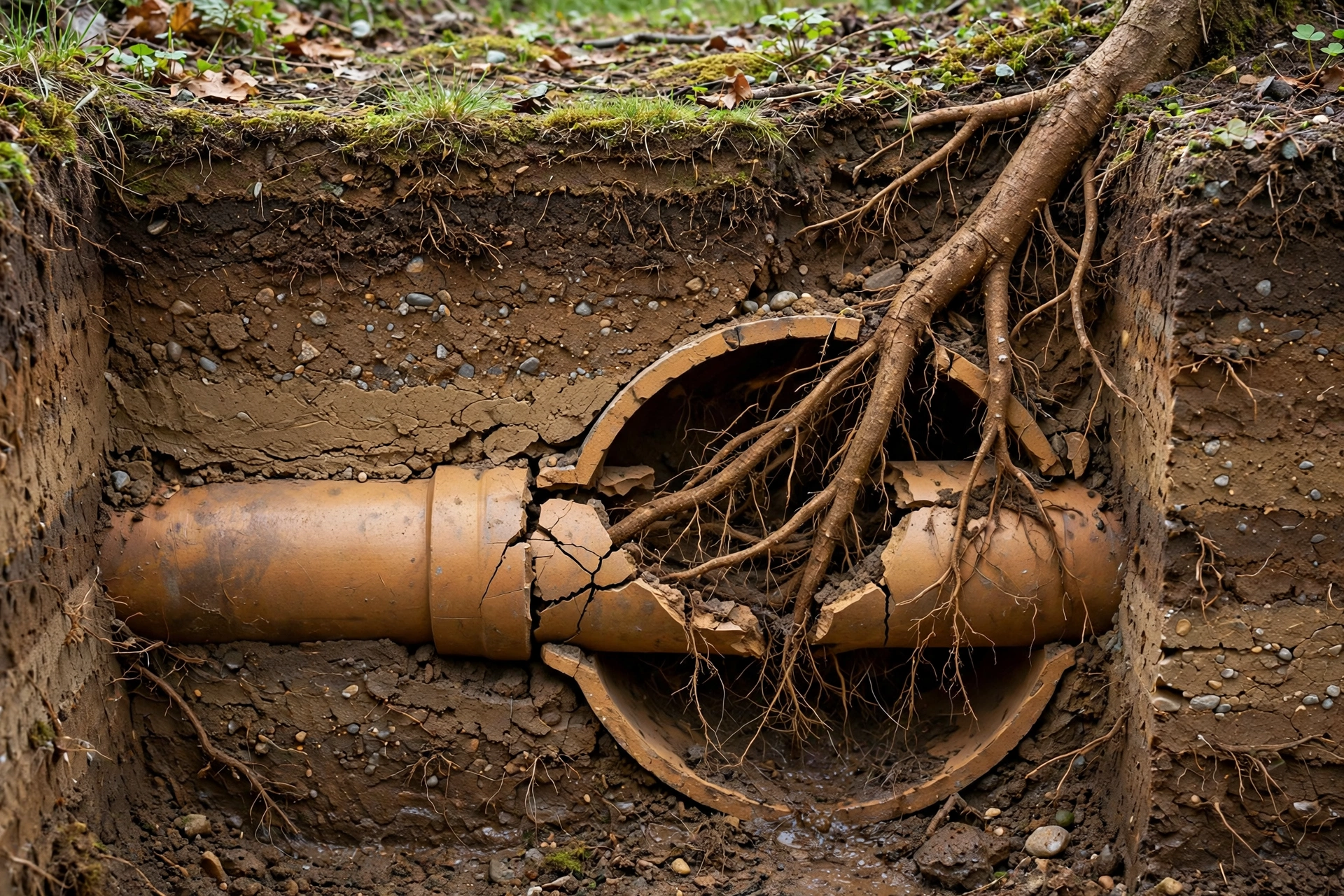
- Tree roots. Texas landscaping favors fast-growing trees with aggressive roots: live oaks, pecans, willows, and mulberries among them. Roots seek moisture and find it at pipe joints, especially in older clay or concrete lines. Root intrusion is the most common reason Texas main line clogs recur after snaking: the snake cuts the roots, the roots grow back.
- Slab foundations and long runs. Many Texas homes sit on slabs with drain lines buried underneath or running long distances to the street. Longer runs mean more pipe where grease and scale can accumulate, and repairs under a slab are a bigger deal, which is one more reason to catch problems with a camera before they become emergencies.
You do not need to diagnose which of these applies to your home. You just need to know they exist, so that when a plumber mentions scale, roots, or a belly in the line, the words mean something to you.
When to Call a Professional
Call sooner rather than later when you see any of these:
- More than one drain is affected, or backups appear in fixtures you did not use
- Sewage odor or visible sewage backup, which is a health hazard, not just a nuisance
- The same drain clogs again within weeks of being cleared
- Water drains but never fully, even after your best DIY efforts
- You suspect the main line: gurgling across fixtures, water at the cleanout, slow drains on the lowest floor
- Your home has older pipes and you have never had the lines inspected
What a professional brings that DIY cannot: motorized augers that reach 75 feet or more, hydro jetting that actually cleans pipe walls, and most importantly, a camera that shows what is really in there. A good service call ends with you understanding the cause, not just enjoying temporary flow. For stubborn fixture clogs, a dedicated drain unclogging service or clogged drain repair visit is the right next step; for kitchen-specific trouble, see kitchen sink drain clog service.
Real talk: calling a pro is not admitting defeat. It is what you do after the cheap, safe options are exhausted. The most expensive plumbing customers are not the ones who call early; they are the ones who call after three weekends of escalating DIY.
What NOT to Do
A short list of things that feel productive but reliably make things worse:
- Do not keep pouring chemical cleaner into a standing-water clog. If the first bottle did not work, the second one just adds concentrated chemical sitting against your pipes.
- Do not use a pressure washer or garden hose with a spray nozzle jammed into the drain. Uncontrolled pressure in the wrong direction can blow apart joints or push the clog deeper.
- Do not disassemble the main cleanout yourself unless you know what you are doing. Opening a cleanout on a fully blocked main line can release backed-up sewage with real force.
- Do not ignore a recurring clog. A drain that needs clearing every month is telling you about scale, roots, or pipe damage. Each temporary clearing costs money; the diagnosis costs less than two more temporary clearings.
- Do not flush "flushable" wipes. They do not break down like toilet paper. Ask any plumber what they pull out of main lines, and wipes top the list.
Frequently Asked Questions
Why does my drain keep clogging in the same spot?
Because the underlying cause was never removed. Snaking punches a hole through a clog but leaves grease, scale, or roots on the pipe walls, so the clog rebuilds on the same rough surface. Recurring clogs in one spot usually mean buildup that needs hydro jetting, root intrusion, or a structural issue like a pipe belly, and a camera inspection tells you which (PlumBrite, 2026).
Are chemical drain cleaners safe for my pipes?
Occasional use of mild enzyme-based products is generally gentle. Caustic chemical cleaners based on sodium hydroxide or sulfuric acid are a different story: they generate heat that can soften PVC, corrode metal pipes, and degrade rubber seals, and they rarely resolve the actual cause of a clog (Anta Plumbing, 2026; Anchor Plumbing Services, 2026).
What causes main sewer line clogs in Texas homes?
The big three are tree root intrusion at pipe joints, grease and scale accumulation over long pipe runs, and soil movement from expansive Texas clay creating low spots or separated joints. Older clay or concrete lines are most vulnerable. A camera inspection is the reliable way to identify which one you are dealing with.
Can I use boiling water to clear a grease clog?
Hot water can help soften fresh grease in a slow (not fully blocked) kitchen drain, but actually boiling water risks softening PVC pipe and damaging seals. Use hot tap water or a kettle that has cooled slightly off the boil. For an established grease clog, hot water alone rarely clears it.
How do I know if the problem is the main line or just one drain?
One slow fixture with everything else normal means a local clog. Multiple slow drains, gurgling sounds across fixtures, water backing up in the shower when the toilet flushes, or water visible at the outdoor cleanout all point to the main line. When in doubt, check the lowest drain in the house: main line problems show up there first.
When should I stop trying DIY and call a plumber?
Stop when more than one fixture is affected, when you smell sewage or see backup, when the clog returns within days, or when your safe DIY steps have not worked. Also call before using aggressive methods on old pipes: a quick professional assessment is cheaper than repairing damage from a DIY attempt gone wrong (Colossal Plumbing, n.d.).
Related Guides
- Drain Cleaning Cost in Texas: 2026 Price Guide - national average prices for every drain cleaning method, what drives cost up or down, and how to avoid overpaying.
- Hydro Jetting vs Drain Snake: Which Does Your Clog Need? - a side-by-side comparison of the two main cleaning methods, their costs, and when each one is the right call.
References
Anchor Plumbing Services. (2026). Are chemical drain cleaners safe for pipes? Risks & alternatives. https://anchorplumbingservices.com/the-truth-about-chemical-drain-cleaners/
Anta Plumbing. (2026, August 25). Do chemical drain cleaners damage your pipes? https://www.antaplumbing.com/blog/do-chemical-drain-cleaners-damage-your-pipes/
Ben Franklin Plumbing. (2026). Are chemical-based drain cleaners bad for pipes? https://benfranklinplumbingkc.com/are-chemical-based-drain-cleaners-bad-for-pipes/
Colossal Plumbing. (n.d.). Warning signs: When to call for residential drain cleaning. http://colossalplumbing.com/warning-signs-when-to-call-for-residential-drain-cleaning
PlumBrite. (2026, September). Why does my drain keep clogging? https://www.plumbriteomaha.com/blog/2026/september/why-does-my-drain-keep-clogging-6-signs-its-more/
Drain trouble that won't wait?
Same-day appointments available across 100+ Texas cities. Call (833) 757-4791 for an upfront written estimate before any work starts.