
Drain Cleaning Cost in Texas: 2026 Price Guide
Nobody wakes up excited to spend money on drain cleaning. But when the kitchen sink fills up instead of draining, or the shower turns into a foot bath, the first question is always the same: what is this going to cost me? This guide walks through what drain cleaning typically costs in Texas in 2026, using published national and industry averages, so you know a fair price when you see one.
One important note before we start: every price in this guide is a published industry average, not a quote from Drain Cleaning TX. Prices shift with your city, the severity of the clog, and the method needed. Treat these numbers as your homework before you call, not as a promise of what any specific company will charge.
What "Drain Cleaning" Actually Covers
"Drain cleaning" sounds like one service, but it is really an umbrella term for several different jobs. A plumber might clear a hair clog from a bathroom sink with a small hand auger in twenty minutes. That same phrase could also describe feeding a motorized machine cable 75 feet down a main sewer line, or pressure-washing the inside of a pipe with water at several thousand PSI. Same label, very different work, very different price.
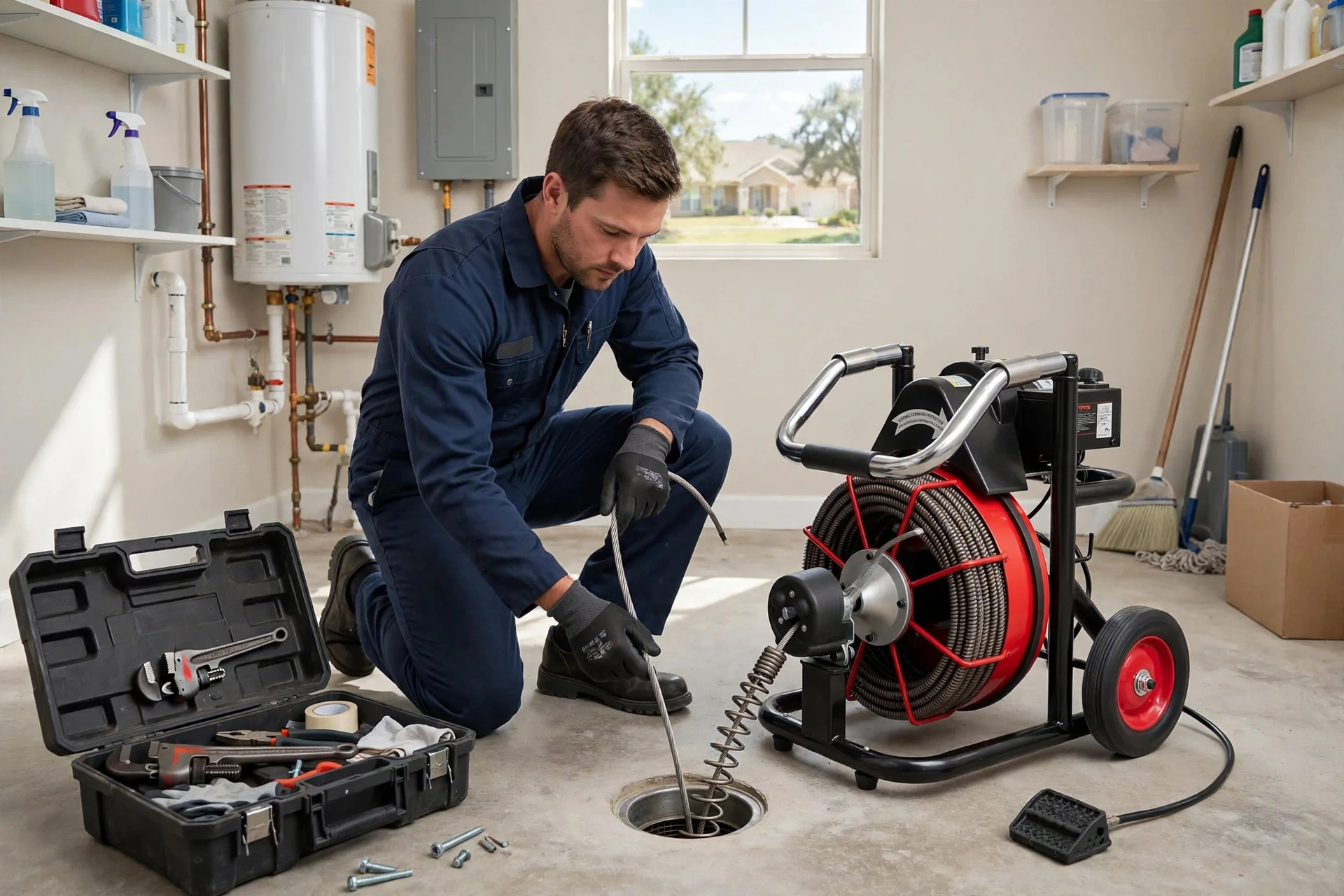
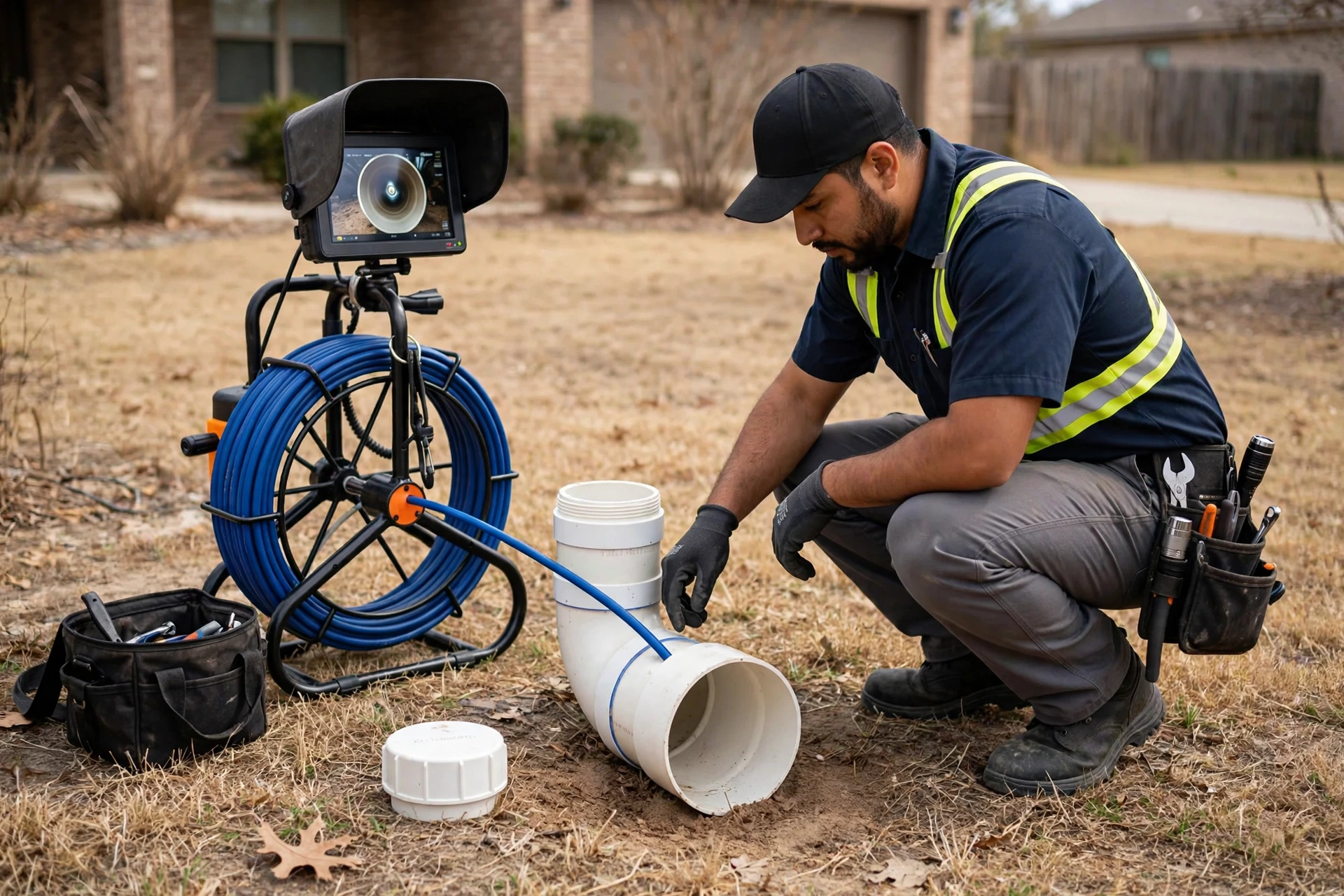
The four main methods you will hear about are snaking (also called augering), hydro jetting, camera inspection, and chemical treatment. Snaking feeds a flexible metal cable into the drain to break through or retrieve a blockage. Hydro jetting uses high-pressure water to scour the interior walls of the pipe clean. A camera inspection sends a small waterproof camera down the line so the plumber can see exactly what is going on inside. Chemical treatment is usually a pour-in product, and it is mostly a maintenance tool, not a real fix for a serious clog.
When you call for a quote, ask which method the company plans to use and what the clog situation looks like. A company that quotes one flat number for everything, without asking where the clog is or what has been tried already, is guessing. A company that asks questions first is diagnosing, and that is what you want.
The Short Answer: National Averages for 2026
Here is the fastest honest answer the data gives. Angi, updated in August 2026, reports that professional drain cleaning typically costs between $147 and $352, with an average around $246 (Angi, 2026). Thumbtack's 2026 figures put the national average range at $186 to $549, with a low end near $85 and a high end around $1,223 for severe jobs (Thumbtack, 2026). Modernize reports a 2026 range of $100 to $500 or more depending on severity and location (Modernize, 2026). A 2026 plumbing price guide lands at $100 to $350 for standard service, with a $225 average (Plumbing Price Guide, 2026).
Those ranges overlap nicely, which is a good sign the numbers are in the right ballpark. The wide spread is not a contradiction. It reflects the umbrella-term problem from the last section: a simple bathroom sink clog and a main sewer line blockage are both "drain cleaning," and they live at opposite ends of that range.
| Method | Typical national range | Best for |
|---|---|---|
| Drain snake / hand auger | $100-$250 | Standard clogs near the fixture: hair, soap, food debris |
| Motorized auger | $150-$350 | Deeper or tougher clogs further down the line |
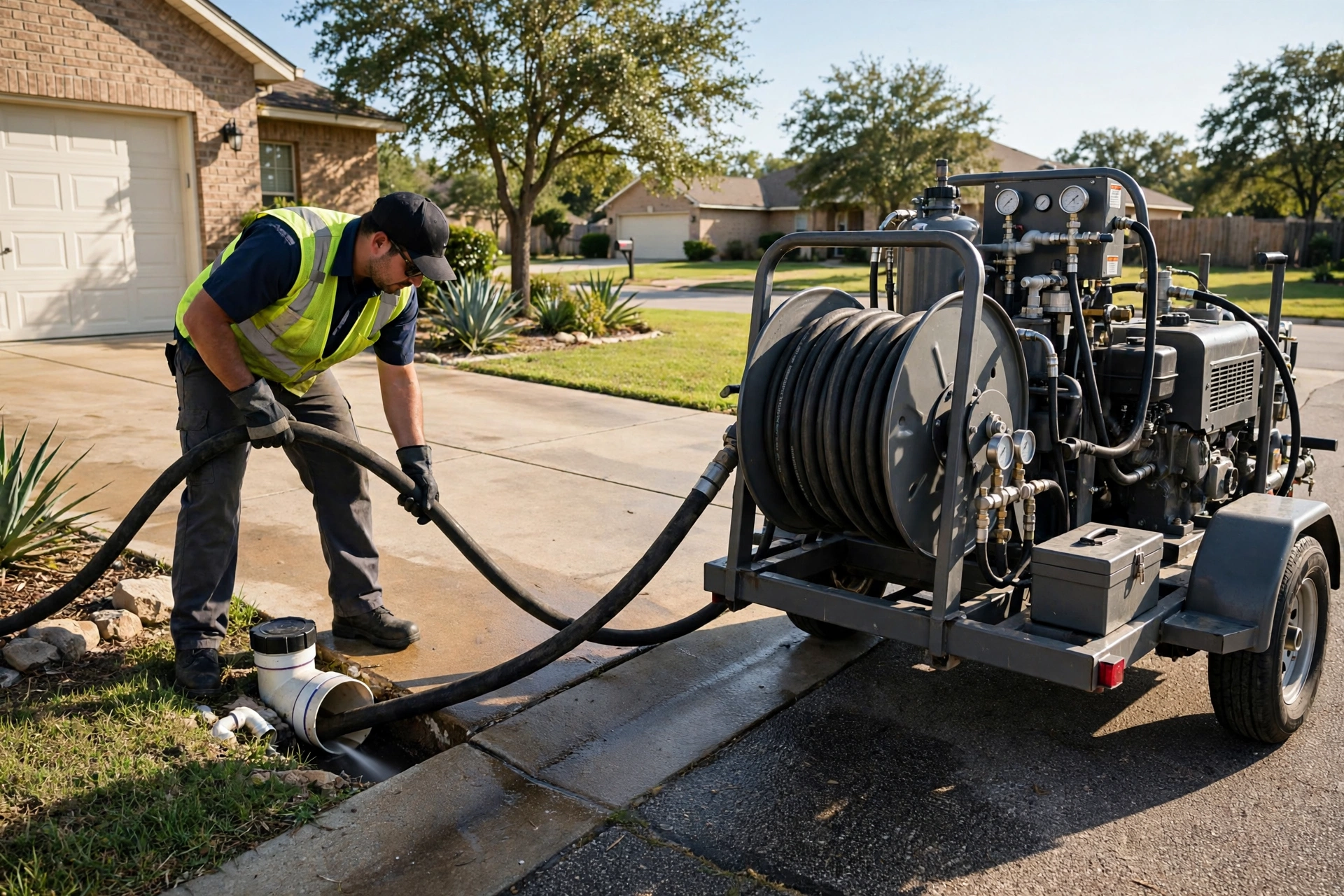
| Hydro jetting | $250-$800 | Grease, mineral scale, and root intrusions a snake cannot fully clear |
| Camera inspection | $100-$500 | Diagnosing hidden problems, recurring clogs, pre-purchase checks |
| Chemical treatment | $50-$150 | Minor maintenance only, not a fix for real blockages |
Sources: Plumbing Price Guide (2026); Angi (2026). These are published industry averages, not this company's prices.
Cost by Where the Clog Is
The single biggest price driver is where the clog lives. Problems inside the house, at or near a fixture, cost less than problems in the outdoor pipes connecting your home to the sewer or septic system. Thumbtack's breakdown by location is a useful reference point (Thumbtack, 2026):
| Clog location | Typical range |
|---|---|
| Kitchen sink | $100-$225 |
| Bathroom sink, shower, or tub | $150-$225 |
| Laundry drain | $150-$215 |
| Toilet | $110-$275 |
| Main sewer line | $100-$800 |
Source: Thumbtack (2026). Industry averages, not quotes.
The main line range is enormous because "main line clog" covers everything from a soft blockage near the cleanout to root intrusion 60 feet out. A main line snaking job typically runs $300 to $600, while hydro jetting a main line usually falls between $700 and $1,100, according to market figures compiled from Angi, HomeAdvisor, and Forbes Home data (True Plumbers, 2026). If a company quotes you for a main line job, the method matters enormously. A $350 snake and a $900 jet are solving the same clog at very different levels of thoroughness.
What Drives the Price Up or Down
Beyond location and method, several factors push a job toward the low or high end of the range:
- Severity and stubbornness. A fresh hair clog near the trap is a quick job. A grease clog that has been building for two years, or roots that have been growing into a sewer line for five, is not.
- Access. If your home has an accessible outdoor cleanout, the job is faster and cheaper. If the plumber has to pull a toilet or work through a roof vent to reach the line, expect the price to reflect the extra labor.
- Pipe condition. Fragile or damaged pipe can turn a cleaning job into a repair conversation. A camera inspection before aggressive cleaning is how honest companies avoid making things worse.
- Timing. After-hours, weekend, and holiday service costs more. Published guides show emergency premiums adding 50 percent to well over double the standard rate in some markets (Four Seasons Heating & Cooling, 2026).
- Diagnosis. Some companies bundle a camera inspection into the job; others charge separately ($100-$500 nationally per Plumbing Price Guide, 2026). Ask whether the inspection is included or extra.
Understanding these levers helps you read a quote. If one bid is much higher than another, the difference is usually in one of these five factors, not in someone padding the bill. Ask which factor applies to your job.
Real talk: the cheapest quote is not always the worst, but a quote that arrives without any questions about your specific situation deserves a second look. Diagnosis is the job. The clearing is just the tool.
Flat-Rate vs Hourly: How Plumbers Price
Most drain cleaning companies price one of two ways: a flat rate per job, or an hourly rate plus parts. Flat-rate pricing is common for standard clogs. You are told the price before work starts, and it stays the same even if the job takes longer than expected. Hourly pricing bills for time on site, which can be fair for straightforward work but gets expensive if a job drags.
Neither model is automatically better. What matters is transparency. Before anyone picks up a tool, you should know the price, what it includes, and what would make it change. Thumbtack notes that many companies charge a diagnostic or service-call fee to visit and assess the problem, and that fee is often waived if you hire them for the repair (Thumbtack, 2026). That is a reasonable arrangement, but the fee and the waiver should be stated up front, not discovered on the invoice.
A few questions that separate transparent companies from murky ones: Is this a flat rate or hourly? Does it include a camera inspection? What happens if the first method does not clear the clog, do I pay twice? Is there a separate trip or diagnostic fee? Honest companies answer these without hesitation because they have already thought them through.
Texas-Specific Factors That Affect Your Bill
Texas is not just any market for drain work. A few regional realities show up in pricing and in which jobs are most common:
- Hard water and mineral scale. Much of Texas has hard water, and mineral scale builds up inside pipes over years. Scale narrows the pipe and gives debris something to snag on, which is exactly the kind of buildup that snaking punches through but does not remove. Homes with visible scale on fixtures likely have it in the lines too.
- Tree roots. Texas yards are full of fast-growing trees with aggressive root systems, and older clay or concrete sewer lines have joints that roots love to exploit. Root intrusion is one of the most common reasons a main line job lands at the high end of the range, and it is often recurring: cutting roots with a snake clears the symptom, while the roots grow back.
- Soil movement. Expansive clay soils are common across Texas, and they swell and shrink with moisture changes. That movement can shift buried sewer lines, creating low spots ("bellies") where waste settles and clogs form repeatedly. A belly is a structural issue, and no amount of cleaning fixes it permanently.
- Slab foundations. Many Texas homes sit on concrete slabs with drain lines running underneath. Access is harder than in homes with basements or crawl spaces, which can add labor to main line work.
None of this means Texas drain cleaning is automatically expensive. It means Texas homeowners benefit more than most from knowing whether their problem is a simple clog or a pipe condition issue, because the fix (and the price) is completely different.
How to Avoid Overpaying
You cannot control what your pipes look like inside, but you can control how you buy the service. These habits consistently save homeowners money:
- Get the diagnosis in writing. A written description of the problem, the method, and the price before work begins. Verbal quotes have a way of growing.
- Ask about the camera. For main line work or any recurring clog, a camera inspection ($100-$500 nationally) is often the cheapest money you will spend, because it prevents paying for the wrong fix twice.
- Compare like with like. A $200 snake quote and a $600 jetting quote are not competing bids for the same job. Make sure every quote names the method.
- Question the upsell politely. If a simple sink clog suddenly requires hydro jetting and a camera inspection and a maintenance plan, slow down. Some of that may be legitimate; all of it should be explained.
- Maintain instead of rescue. Enzyme-based maintenance treatments, drain strainers, and keeping grease out of the kitchen sink cost almost nothing and prevent the emergency calls that carry premium pricing.
Real talk: if a tech tells you your pipes are about to collapse and you need a $5,000 repair today, you are allowed to say "show me the camera footage" and "let me think about it." Real emergencies are rare. High-pressure sales tactics are not.
What Is Usually Not in the Quote
A drain cleaning quote covers clearing the blockage. It typically does not cover repairing damaged pipe discovered during the job, replacing a broken cleanout cap, restoring landscaping or concrete disturbed to access a line, or fixing fixtures. If the camera finds a collapsed section, that is a separate repair conversation, and sewer line repairs run far higher than cleaning: minor repairs like snaking typically cost under $200 while full line replacement averages roughly $3,319 nationally, with per-foot rates of $50 to $250 (Royal Class Service, 2025).
This is why the camera inspection matters so much. It draws the line between a cleaning job and a repair job before anyone is surprised.
Reading Two Quotes Side by Side
Imagine two quotes for the same slow kitchen drain. Company A says $189, flat rate, snaking, no camera. Company B says $340, flat rate, snaking plus camera inspection, with hydro jetting as an option at $590 if the camera shows heavy grease. Which is the better deal?
There is no universal answer, and that is the point. If your drain has never clogged before and everything else flows fine, Company A's simple snaking is probably all you need, and paying $340 would be overspending. But if this is the third clog in the same line this year, Company A is selling you another temporary fix while Company B is offering to find out why it keeps happening. The right quote depends on your history, not just the number.
When comparing bids, line them up on the same dimensions: method named, camera included or not, flat versus hourly, trip or diagnostic fee, and what happens if the first attempt fails. Two quotes that differ on any of those dimensions are not really competing. Once you normalize them, the price gap usually makes sense, and the times it does not, you have found the quote to question.
Red Flags Worth Walking Away From
Most drain cleaning companies are honest. A few patterns, though, are worth treating as warnings:
- A price with no diagnosis. A flat quote given over the phone for a main line job, without a single question about symptoms, is a guess dressed as a price. It usually grows on site.
- Refusal to show camera footage. If you are paying for an inspection, the footage is yours. A company that describes scary findings but will not show you the video is asking for trust it has not earned.
- "Today only" pressure on big repairs. Legitimate cleaning quotes do not expire at midnight. High-pressure deadlines are a sales tactic, not a plumbing reality.
- No written quote. Verbal numbers are the easiest kind to misremember, on both sides. A professional company puts it in writing without being asked twice.
- Chemical cleaner as the whole plan. A "professional" whose solution to your main line clog is pouring in a stronger version of the bottle under your sink is not offering a professional solution.
None of these means a company is dishonest for certain. Each one just means you should slow down, ask the questions from the earlier section, and get a second quote. The second quote is the single most powerful consumer tool in home services, and it costs nothing.
Frequently Asked Questions
How much does it cost to unclog a drain in Texas in 2026?
Published national averages for 2026 put standard drain cleaning between roughly $100 and $350, with an average near $246 (Angi, 2026; Plumbing Price Guide, 2026). Simple fixture clogs sit at the low end; main sewer line work runs $300 to over $1,000 depending on method. Texas pricing generally tracks these national figures, with local variation by city and job complexity.
Why does hydro jetting cost more than snaking?
Hydro jetting uses specialized high-pressure equipment and takes longer, but it cleans the entire pipe interior rather than just punching a hole through the clog. National averages put snaking at $100-$250 and hydro jetting at $250-$800 for standard jobs (Plumbing Price Guide, 2026), with main line jetting reaching $700-$1,100 (True Plumbers, 2026).
Do plumbers charge extra for nights and weekends?
Usually, yes. Emergency and after-hours service commonly carries a premium, and published guides show evening, weekend, and holiday rates running significantly above standard business-hours pricing (Four Seasons Heating & Cooling, 2026). If the situation can safely wait until morning, it usually costs less.
Is a camera inspection worth paying for?
For a first-time simple clog, probably not necessary. For main line issues, recurring clogs, or older homes, yes: at $100-$500 nationally (Plumbing Price Guide, 2026), it is cheap insurance against paying for the wrong fix. It is also how you verify a scary diagnosis before approving a big repair.
Can I just use a store-bought drain cleaner instead?
For a minor slow drain, enzyme-based products are gentle and sometimes help. Caustic chemical cleaners are a different story: they generate heat that can soften PVC, corrode metal pipes, and damage seals, and they rarely fix the underlying cause (Anta Plumbing, 2026; Anchor Plumbing Services, 2026). They are not a substitute for professional cleaning of a real blockage.
How often should drains be professionally cleaned?
There is no universal schedule. Many plumbers suggest preventive cleaning every 18-24 months for homes with recurring grease or root issues, but a home with healthy pipes and good habits may never need scheduled cleaning. Let symptoms and camera findings guide the decision, not a calendar.
Related Guides
- Hydro Jetting vs Drain Snake: Which Does Your Clog Need? - a side-by-side comparison of the two main cleaning methods, their costs, and when each one is the right call.
- Why Your Drains Keep Clogging: A Texas Homeowner's Troubleshooting Guide - room-by-room diagnosis of recurring clogs and what is safe to try yourself.
References
Angi. (2026, August 3). How much does drain cleaning cost? https://www.angi.com/articles/how-much-does-drain-cleaning-cost.htm?industry=Real+Estate&entry_point_id=33797113
Four Seasons Heating & Cooling. (2026). Drain cleaning cost 2026 guide. https://www.fourseasonsheatingcooling.com/blog/drain-cleaning-cost/
HomeAdvisor. (2025). How much does it cost to hydro jet a drain line? https://www.homeadvisor.com/cost/plumbing/hydro-jetting-cost/
Modernize. (2026, August 12). Professional drain cleaning costs: What to expect. https://modernize.com/plumbing/systems/drainage/drain-cleaning-cost
Plumbing Price Guide. (2026, March). Drain cleaning cost: $100-$800 [2026 price guide]. https://plumbingpriceguide.com/drain-cleaning-cost/
Royal Class Service. (2025). How much does sewer line repair cost? 2025 pricing breakdown and key factors. https://www.royalclassservice.com/blog/how-much-does-sewer-line-repair-cost-2025
Thumbtack. (2026). 2026 drain cleaning cost. http://www.thumbtack.com/p/drain-cleaning-cost
True Plumbers. (2026). Drain cleaning in Lakeland & Central Florida. https://trueplumbers.com/plumbing/drain-cleaning/
Drain trouble that won't wait?
Same-day appointments available across 100+ Texas cities. Call (833) 757-4791 for an upfront written estimate before any work starts.