
Hydro Jetting vs Drain Snake: Which Does Your Clog Need?
When a drain stops draining, the fix usually comes down to two options: a drain snake or hydro jetting. Both are professional tools, both clear clogs, and they are not interchangeable. Picking the wrong one means paying for a fix that does not last, or paying for power you did not need. This guide explains how each method actually works, what each one is best at, what they cost on average, and how to tell which one your clog needs.
As with all pricing here: every number is a published national or industry average, not a quote from Drain Cleaning TX. Your actual price depends on the clog, the pipe, and your market.
How a Drain Snake Actually Works
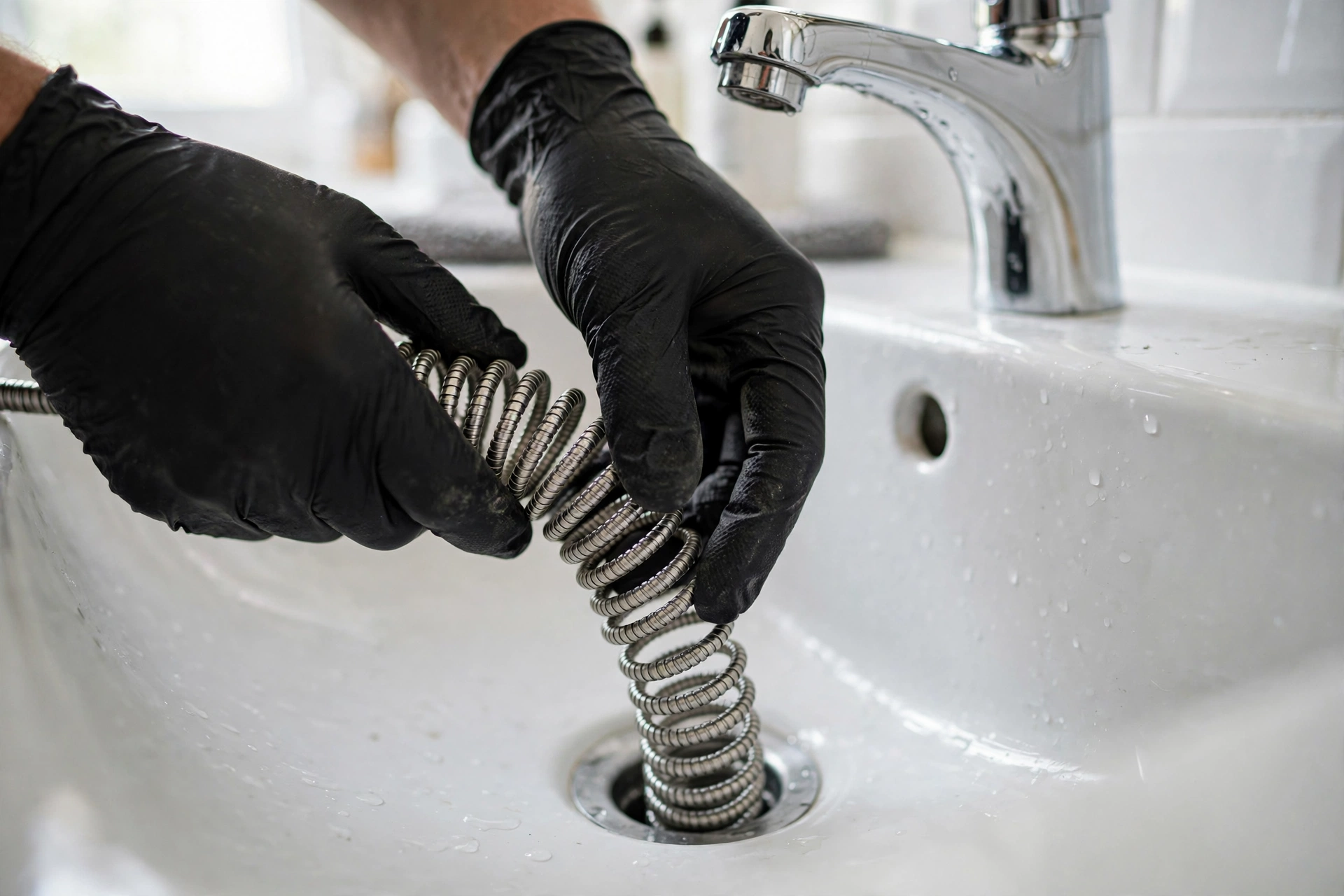
A drain snake, also called a plumber's auger, is a flexible metal cable with a cutting or grabbing head on the end. The technician feeds it into the drain, either by hand for small jobs or with a motorized machine for longer runs, and rotates it as it advances. The head either breaks the blockage apart, hooks it so it can be pulled back out, or bores a channel through it so water can flow again.
Think of it like this: a snake is a targeted strike. It travels down the center of the pipe, finds the obstruction, and deals with that one spot. For a hair clog in a shower drain or a wad of paper in a toilet line, that is exactly the right amount of force. The clog is near the fixture, it is made of soft material, and one focused pass clears it.
Snakes come in sizes. A small hand auger handles bathroom sinks. A medium drum machine handles kitchen and laundry lines. A large sectional machine with heavy cutting heads handles main sewer lines and can even cut through tree roots. The bigger the machine and the further it has to travel, the higher the price: national averages run $100-$250 for standard snaking and $150-$350 for motorized auger work on deeper clogs (Plumbing Price Guide, 2026).
How Hydro Jetting Actually Works
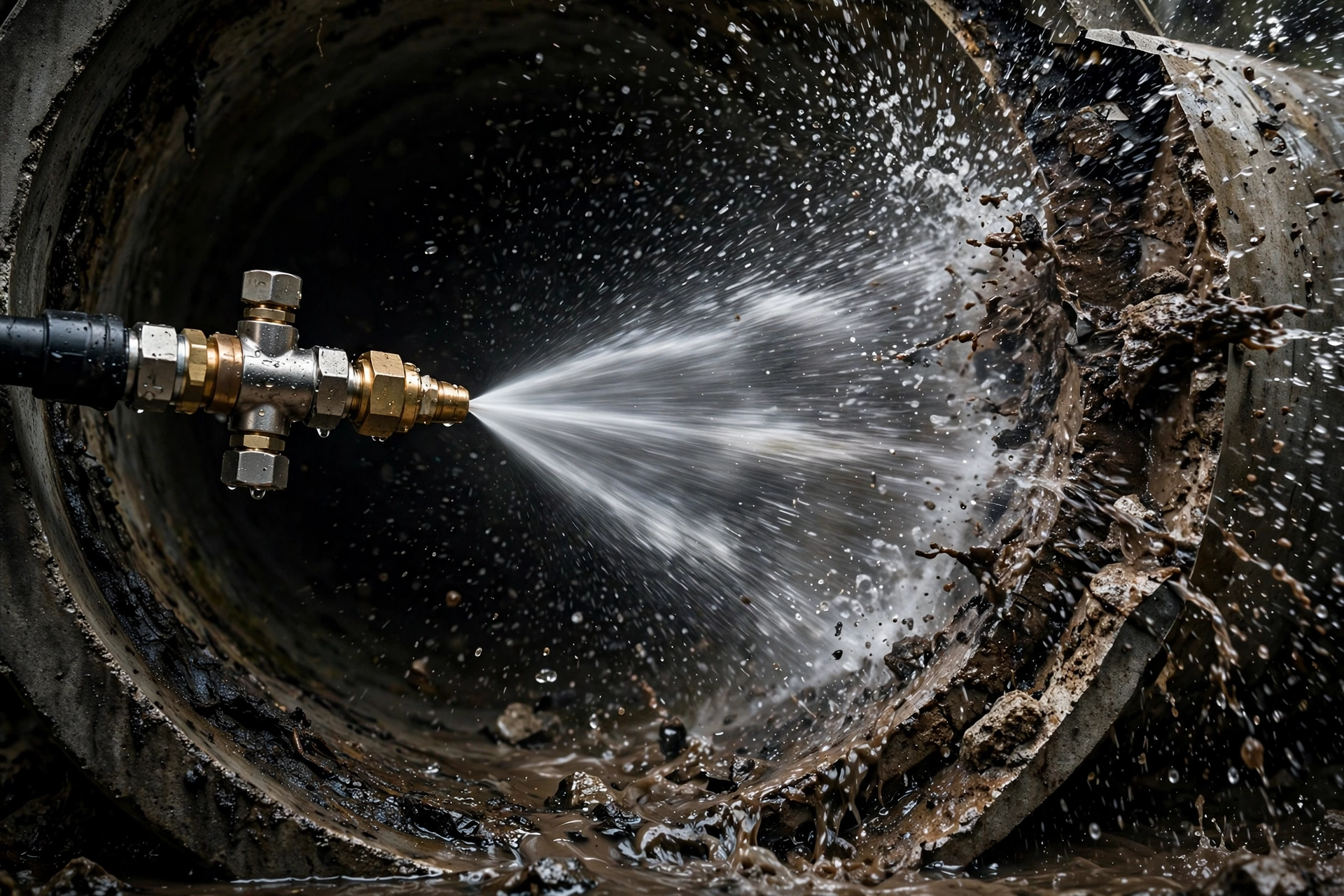
Hydro jetting is essentially pressure washing for the inside of your pipes. A specialized nozzle is inserted into the drain line, and water is blasted through it at pressures from roughly 1,500 to 5,000 PSI, far more powerful than a garden hose or even a fire hose (Go Pro Plumbing, 2025). The nozzle has forward-facing jets that break up blockages and rear-facing jets that propel the nozzle forward while scouring the pipe walls.
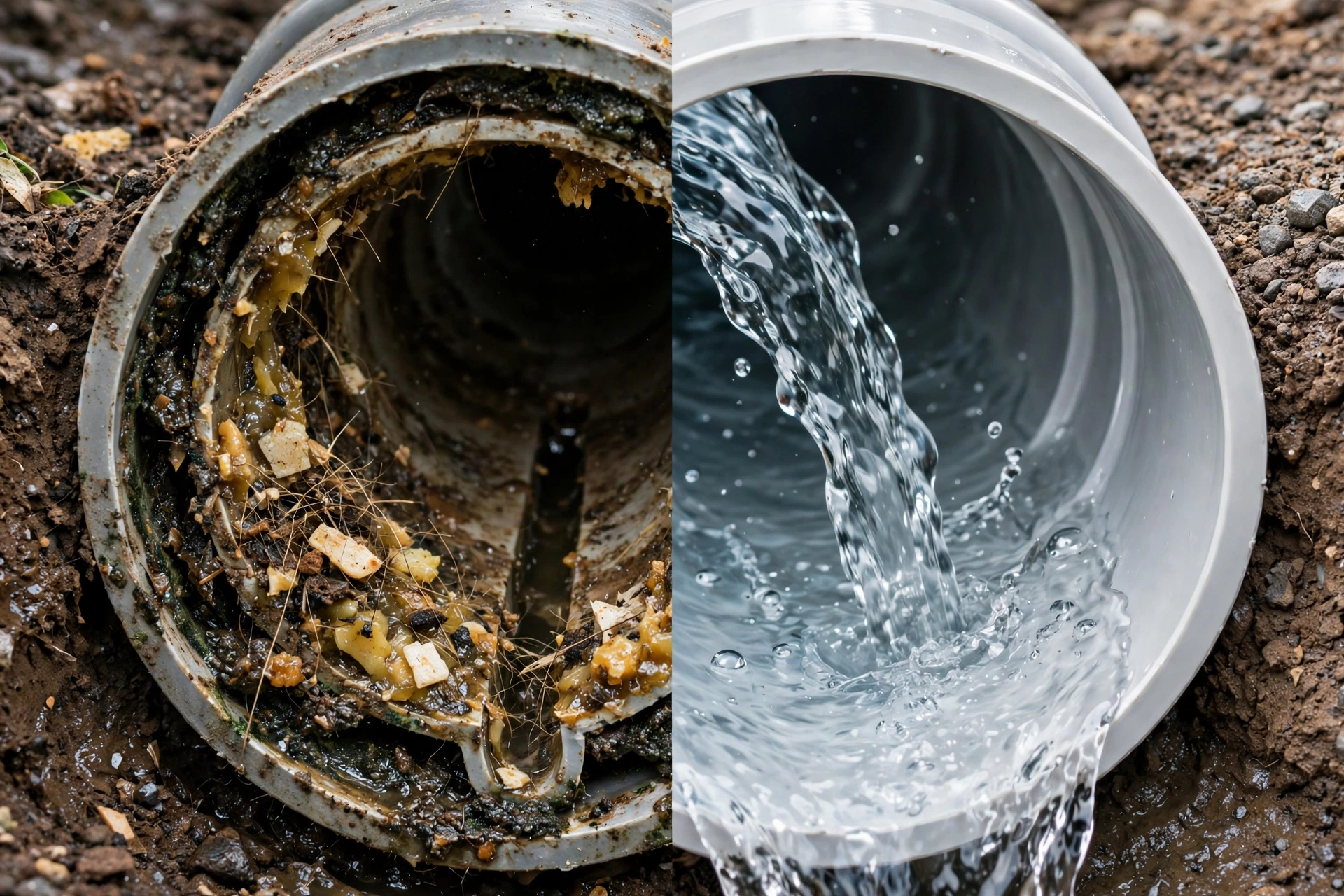
Where the snake is a targeted strike, jetting is a full reset. It does not just punch a hole through the clog; it strips grease, soap scum, mineral scale, and sludge off the entire interior surface of the pipe, restoring something close to the pipe's original diameter. That is why jetting is the go-to for buildup problems rather than single-object clogs. A wad of paper needs a snake. Ten years of grease coating a kitchen line needs a jetter.
Jetting uses only water, which makes it an eco-friendly option with no chemicals left behind (Go Pro Plumbing, 2025). It does require a professional assessment first: the pressure that scours a healthy pipe can damage a fragile one, so reputable companies run a camera inspection before jetting older or suspect lines.
Side-by-Side: Snake vs Jetting
| Drain Snake / Auger | Hydro Jetting | |
|---|---|---|
| How it works | Rotating cable bores through or retrieves the blockage | High-pressure water (1,500-5,000 PSI) scours the whole pipe interior |
| Typical national cost | $100-$350 | $250-$800 standard; $700-$1,100 for main sewer lines |
| Best for | Hair, soap, paper, food debris, single soft clogs near the fixture | Grease, mineral scale, sludge, root intrusions, recurring clogs |
| What it leaves behind | Clears a channel; residue stays on pipe walls | Near-original pipe diameter; walls stripped clean |
| How long results last | Weeks to months for buildup-type clogs | Often 1-2 years or more for the same buildup |
| Risk profile | Low for most pipes; can scratch or catch on damaged sections | Needs sound pipe; camera inspection recommended first |
| Chemicals used | None | None, water only |
Cost sources: Plumbing Price Guide (2026); True Plumbers (2026), citing Forbes Home and Angi/HomeAdvisor data. Pressure figures: Go Pro Plumbing (2025). All industry averages, not quotes.
Which Clogs Each Method Fixes Best
Matching the tool to the clog is the whole game. Here is how it usually breaks down:
- Reach for the snake: hair clogs in showers and bathroom sinks, toilet paper blockages, food debris in a kitchen sink trap, a toy or object lodged in a toilet, any first-time clog in a single fixture where the rest of the plumbing works fine. If you want to understand the most basic version of this service, our drain snake service page covers what a standard augering visit looks like.
- Reach for the jetter: kitchen lines coated in grease, recurring clogs that keep coming back after snaking, slow drains throughout the house, mineral scale buildup (common with Texas hard water), tree root intrusion in the main line, and pre-emptive deep cleaning before a camera inspection or pipe lining. Our hydro jetting service page has more on how the process works.
The pattern is simple: soft, localized, first-time clogs favor the snake. Hardened, widespread, or recurring buildup favors jetting. When in doubt, the camera decides. A quick look inside the pipe removes the guesswork from the choice.
Cost Comparison: What You Actually Pay
On national averages, snaking is the clear budget option and jetting costs roughly two to three times as much for comparable jobs. Standard drain snaking runs $100-$250, with motorized auger work at $150-$350 (Plumbing Price Guide, 2026). HomeAdvisor's 2025 data puts standard residential hydro jetting between $350 and $600, with an average around $475, while severe blockages can reach $2,000 (HomeAdvisor, 2025). For main sewer lines specifically, snaking typically costs $300-$600 while jetting runs $700-$1,100 (True Plumbers, 2026).
But sticker price is not the whole math. A $200 snaking that clears a grease clog for three months, repeated four times a year, costs $800 a year and a lot of frustration. A single $600 jetting that keeps the same line clear for two years costs $300 a year. For recurring buildup clogs, the more expensive method is often the cheaper one over time. That is the calculation worth doing before you choose.
Real talk: if you have paid to have the same drain snaked three times in a year, you do not have a clog problem anymore. You have a cleaning-method problem. Stop buying the cheap fix and ask what a lasting fix looks like.
When Snaking Is Enough
Most first-time clogs do not need a jetter. Snaking is the right call when the clog is in a single fixture, the rest of your drains work normally, the blockage is made of soft material like hair or paper, and it has not happened before in the same spot. A straightforward snaking job is quick, affordable, and completely effective for this category.
Snaking is also the safer default for fragile pipes. Old, corroded, or already-cracked lines may not be good candidates for high-pressure water, and a camera inspection comes first either way. If the pipe cannot safely take jetting, a careful snaking may be the best available option short of repair.
There is no shame in the simple fix when the simple fix matches the problem. Not every clog is a crisis, and a good plumber will tell you when the $200 option is genuinely all you need.
When Jetting Pays Off
Jetting earns its higher price in specific situations. The clearest is the recurring clog: if the same drain has been snaked twice and keeps slowing down, the pipe walls are coated and only a full scour will reset them. Grease is the classic case. Snaking bores a hole through a grease clog, but the grease lining remains, and the next clog starts building immediately on that rough surface. Jetting removes the lining itself.
Root intrusion is another. A snake with a cutting head can chop through roots, but it leaves the root mass and the rough entry points behind, so roots grow back, often within a year. Jetting cuts roots and flushes the debris out, buying significantly more time. It does not seal the cracks roots entered through, though, which brings us to the limits.
Jetting also makes sense as preventive maintenance for problem lines: restaurants do it routinely, and homes with chronic grease or scale issues benefit from a scheduled deep clean every year or two. For main lines, pairing jetting with a camera inspection before and after gives you documented proof the line is actually clean, not just flowing.
How Long Each Job Takes
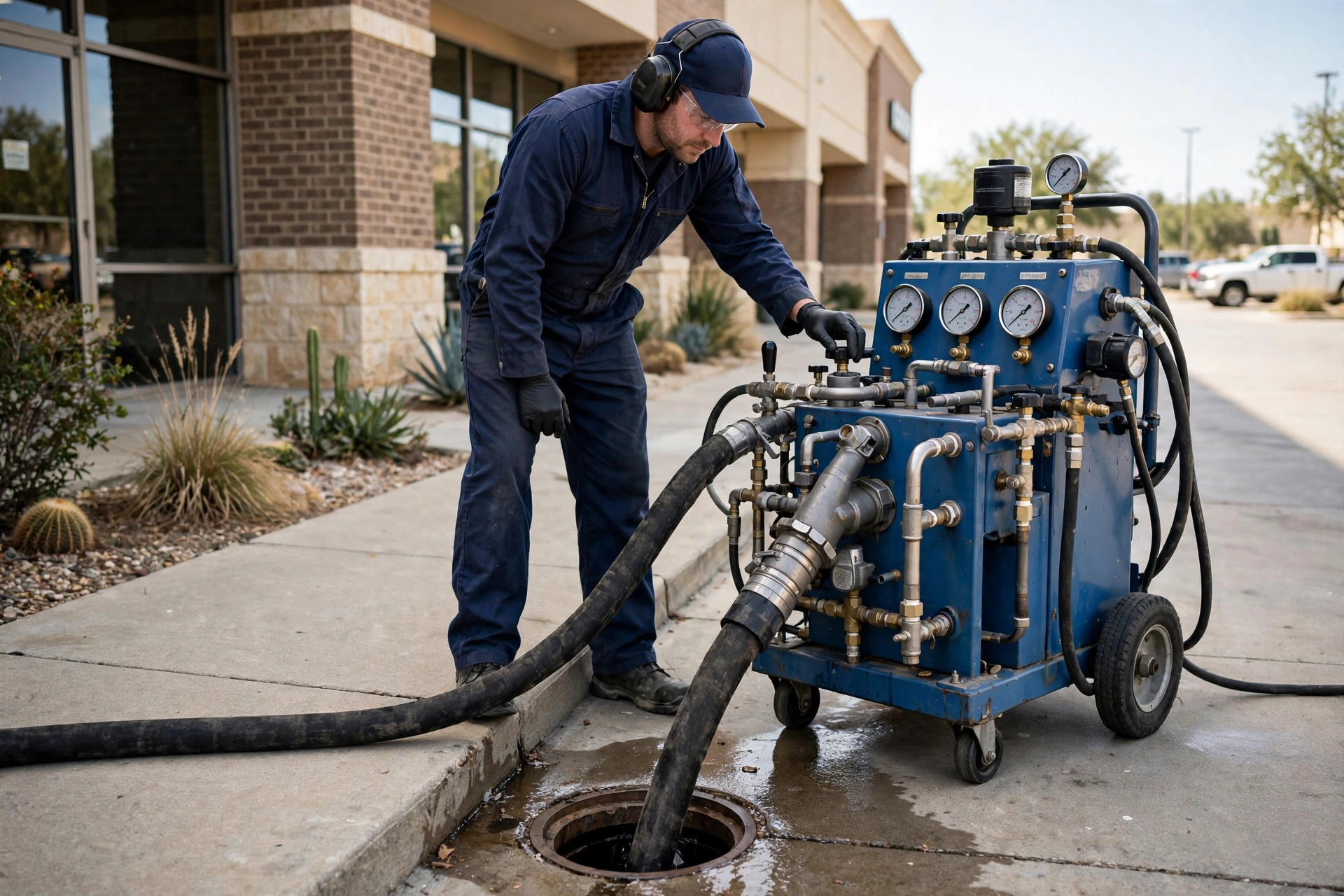
Time on site is part of the price difference. A straightforward snaking of a bathroom or kitchen drain often takes 30 minutes to an hour, including setup and testing. Main line snaking runs longer, typically one to two hours depending on the distance the cable has to travel and how stubborn the blockage is.
Hydro jetting takes longer because there is more to it: setup of the jetter unit, the camera inspection that should come first, the jetting passes themselves, and a post-cleaning camera check to confirm the line is actually clean. Plan on one to three hours for a standard residential jetting job (Go Pro Plumbing, 2025). That extra time is not inefficiency; it is the inspection and verification steps that make jetting a documented result rather than a hopeful one. When a quote for jetting seems high next to a quick snaking price, part of what you are buying is the certainty that comes with looking inside the pipe twice.
What Neither Method Can Fix
This is the section that saves people the most money, so read it twice. Neither snaking nor jetting fixes broken pipe. If your sewer line has any of these structural problems, cleaning is at best a temporary measure:
- Collapsed or crushed pipe. No amount of water pressure restores a pipe that has caved in. This needs excavation and replacement.
- Severe offsets or bellies. A section of pipe that has sunk creates a low spot where waste settles. Cleaning clears the symptom; the belly refills. Expansive clay soils, common in Texas, can cause this kind of shifting over time.
- Extensive root intrusion. Jetting manages roots, but if roots have shattered the pipe or entered through major breaks, the pipe itself needs repair or lining.
- Heavy corrosion or channeling. Old cast iron can corrode from the inside until the bottom of the pipe is essentially gone. Cleaning a pipe with no bottom is pointless.
Recurring clogs after professional cleaning are the classic symptom of a structural problem (Royal Class Service, 2025). That is when a camera inspection stops being optional. It is the only way to see whether you are dealing with buildup, which cleaning solves, or damage, which it does not. Spending $700 on jetting a collapsed line is worse than spending $0 and knowing you need a repair.
Real talk: any company that wants to jet your line but does not want to camera it first is asking you to trust them with your money and your pipes at the same time. The camera protects both of you. Insist on it for main line work.
The Camera Inspection: Your Tiebreaker
If you take one idea from this guide, make it this: when the choice between snaking and jetting is unclear, a camera inspection settles it. The camera shows the actual condition inside your pipe: the type of buildup, how much of the line is affected, whether roots are present, and whether the pipe itself is sound enough for high-pressure water.
A typical inspection takes 30 to 60 minutes. The technician feeds a small waterproof camera through a cleanout or fixture drain while you watch the live feed on a monitor. A good tech narrates what you are seeing: "that white crust is scale," "those hairlike strands at the joint are roots," "see how the pipe dips here, that is a belly holding water." That narration is the real product. The video file afterward is your documentation.
The inspection pays for itself in two scenarios. First, when it reveals that snaking is enough, saving you the jetting upcharge. Second, when it reveals structural damage, saving you from paying for any cleaning at all on a pipe that needs repair. At $100-$500 nationally (Plumbing Price Guide, 2026), it is the cheapest form of certainty in the whole process. For main line decisions especially, skipping the camera to save a hundred dollars while choosing between a $400 and a $900 fix is false economy.
One practical tip: ask for the footage or at least a few still images. If you end up getting a second opinion or a repair quote later, that documentation means the next company starts from knowledge instead of from zero, and you do not pay for the inspection twice.
After the Cleaning: Keeping the Line Clear
Whichever method clears your clog, a few habits determine how long the result lasts:
- Grease discipline. This is the big one for kitchen lines. Scrape, wipe, strain, and never pour cooking oil or grease down the drain. A line that was just jetted clean will stay clean for years with good grease habits and re-clog in months without them.
- Enzyme maintenance. Monthly enzyme treatments feed beneficial bacteria that digest organic buildup in kitchen and laundry lines. They are slow and gentle, which makes them ideal maintenance and useless rescue. Start them after a professional cleaning, not instead of one.
- Root management. If roots were the problem, ask the plumber about the entry points the camera found. Options range from scheduled maintenance cleanings to repairing the specific joints roots are exploiting. What you should not do is nothing: cut roots grow back, usually within a year.
- Watch the early signs. A drain that was blazing fast after service and gradually slows over months is telling you buildup is returning. Calling at the "slow" stage is a maintenance visit. Waiting until it is fully blocked is an emergency visit, with emergency pricing.
- Know your pipe. If the camera showed scale, old pipe, or a belly, write it down and keep it with your home records. Future you, and any future plumber, will make better decisions with that history than without it.
None of this requires products or service plans. It requires attention: noticing slow drainage early, keeping grease out of the kitchen sink, and remembering what the camera showed. The homeowners with the fewest drain emergencies are rarely the ones with the newest pipes. They are the ones who pay attention.
Frequently Asked Questions
Is hydro jetting better than snaking?
It is more thorough, not universally better. Jetting cleans the entire pipe interior and lasts longer against grease, scale, and roots. Snaking is cheaper, faster, and completely adequate for simple soft clogs near a fixture. "Better" depends on what is in your pipe, which is why a camera inspection is so useful before deciding.
How much does hydro jetting cost compared to snaking?
Nationally, standard snaking averages $100-$250 while standard residential hydro jetting averages $350-$600 (Plumbing Price Guide, 2026; HomeAdvisor, 2025). For main sewer lines, the gap is roughly $300-$600 for snaking versus $700-$1,100 for jetting (True Plumbers, 2026). These are industry averages, not quotes.
Can hydro jetting damage pipes?
On sound pipe, no: it is designed for the job and uses only water. On fragile, corroded, or cracked pipe, high pressure can worsen existing damage. That is why reputable companies inspect with a camera first, especially on older lines. If a company wants to jet without looking inside first, get a second opinion.
How long does hydro jetting last?
For buildup-type problems like grease and scale, a thorough jetting commonly keeps a line clear for one to two years or more, versus weeks to months for snaking the same buildup. For root intrusion, jetting buys more time than snaking but roots eventually grow back unless the entry points are repaired.
Will snaking remove tree roots?
A motorized snake with a cutting head can cut through roots and restore flow, but it leaves root fragments and rough surfaces behind, so regrowth is typical within a year. Jetting clears roots more completely. Neither seals the cracks the roots came through; lasting root problems eventually need pipe repair or lining.
Do I need a camera inspection before choosing?
For a simple first-time fixture clog, no. For main line work, recurring clogs, or any situation where you are choosing between a $300 fix and a $900 fix, yes. At $100-$500 nationally (Plumbing Price Guide, 2026), the inspection is the cheapest way to make sure you are buying the right solution.
Related Guides
- Drain Cleaning Cost in Texas: 2026 Price Guide - national average prices for every drain cleaning method, what drives cost up or down, and how to avoid overpaying.
- Why Your Drains Keep Clogging: A Texas Homeowner's Troubleshooting Guide - room-by-room diagnosis of recurring clogs, safe DIY steps, and when to call a pro.
References
Go Pro Plumbing. (2025, October 23). Clogged up? Find Sacramento's top hydro jetting & sewer solutions. https://goproplumbingrepair.com/hydro-jetting-sacramento-ca/
HomeAdvisor. (2025). How much does it cost to hydro jet a drain line? https://www.homeadvisor.com/cost/plumbing/hydro-jetting-cost/
Plumb Time Plumbing & Drain Services. (2025, October 10). Columbia SC plumbing company breaks down hydro-jetting costs and what to expect. https://bakersfield.marketminute.com/article/marketersmedia-2025-10-10-columbia-sc-plumbing-company-breaks-down-hydro-jetting-costs-and-what-to-expect
Plumbing Price Guide. (2026, March). Drain cleaning cost: $100-$800 [2026 price guide]. https://plumbingpriceguide.com/drain-cleaning-cost/
Royal Class Service. (2025). How much does sewer line repair cost? 2025 pricing breakdown and key factors. https://www.royalclassservice.com/blog/how-much-does-sewer-line-repair-cost-2025
True Plumbers. (2026). Drain cleaning in Lakeland & Central Florida. https://trueplumbers.com/plumbing/drain-cleaning/
Drain trouble that won't wait?
Same-day appointments available across 100+ Texas cities. Call (833) 757-4791 for an upfront written estimate before any work starts.